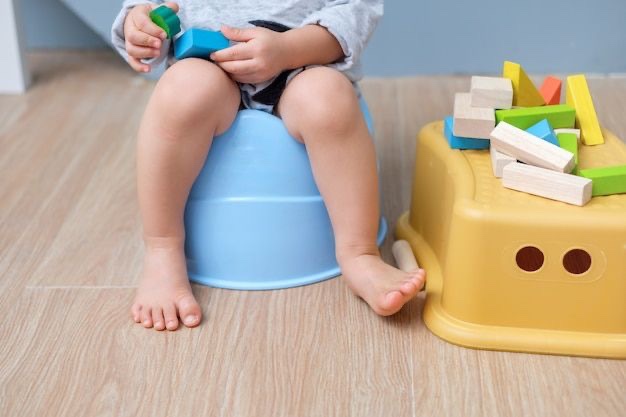
Today we are going to talk some poopy stuff. Potty training it is— a real deal in every parent’s and child’s life. Potty training is about breaking a lifelong habit. The thought can be haunting and the task can be daunting for any parent. The first and the most important thing is to start it with the right mindset by being prepared for what is coming so that it doesn’t end up into a bathroom battle of sorts. With few basics in mind, we can make the transition easier and smoother. Here are some tips to help you potty train your toddler with ease.
What is the right age to start potty training?
The best time to start potty training a toddler is between 18 to 24 months. While some children may be ready earlier, most are not developmentally ready until this age range. Before starting, it is also important to assess if your toddler is ready. Signs that they may be ready include being able to stay dry for around 2 hours and being able to follow simple instructions. Also, they should be showing some interest in the process maybe when they do their own thing or watch somebody else do the thing.
Preparing for potty training
Last few weeks I’ve been training my little one. My experience with him was completely different that what it was with my first born. While the first one took only two days to be completely off the diaper, the second one took about a month to completely understand the cues. So the first thing we need to be prepared as parents is that each child is different and they will take their own sweet time.
Also, it is important to prepare your toddler. You can talk to your toddler about the process and why it is important to learn to use the potty. Use words like “pee pee” and “poo poo” often to make them understand the process in simple terms. Sensitizing your little one with books and movies is always a good idea and makes the process so much fun and easy.
Also, you need to be prepared with the right clothings and equipments. Clothes that have loose fitting and are easy to take off and on are a good bet. It is also a good idea to invest in the right potty chair or a potty seat, training underpants. Some of the products needed are discussed below.
Potty training products
Potty chair
The most essential potty training product is a potty chair. Most potty chairs come with a removable inner bowl for easy clean-up, and some models even feature removable splashguards for extra protection. Potty chairs are available in a variety of sizes and styles, so it’s important to choose one that is comfortable and fits your child’s needs.
Potty seat
Another important potty training product is a potty seat. Potty seats are designed to fit on the seat of an adult toilet and make it easier for a child to use the toilet independently. Potty seats come in a variety of sizes and styles, and some models even come with a step-stool that makes it more comfortable to use. Go for the type and model that suits you.
Toilet training pants
Toilet training pants are also an important potty training product. They are designed to fit snugly and help a child stay dry during the potty training process. Toilet training pants are available in a variety of sizes and styles. While some people prefer cloth diapers during the process, some might prefer the ones with special absorbent layers that provide extra protection against leaks. Have a good time picking your favorite pants, may be with some of your child’s favorite character to make it more interesting for your child.
Books and videos
Books and videos are the best medium to communicate to your toddler. Books are my personal saviour too. I sensitize my child with books for every upcoming life event. It is not only highly effective in communicating the message but it also keeps my child engaged and entertained.
Potty stickers and training charts
Potty stickers and charts provide a great way for children to track their successes and encourage them to keep trying. You can celebrate every little success with the help of a little sticker just for them to know that they did something right.
How to potty train a toddler successfully
1. Start when your child is ready
The best time to start potty training your toddler is between 18 to 24 months. This is the time when they have the physical and mental capacity to understand the process. Starting too early might take a longer time to train while delaying it might also increase the duration while also creating health issues. As stated earlier, it is also important to understand the cues that your child is ready for the training process.
2. Use positive reinforcement
Positive reinforcement is the key when potty training toddlers. Praise your child when they use the toilet correctly and provide rewards for successfully using the potty. This will help reinforce the desired behavior.
3. Be patient
Potty training can take a long time and some toddlers may take longer than others. Don’t get frustrated if your child isn’t picking up the process quickly. Just keep trying and eventually they will get it.
4. Use right potty training products
There are a variety of potty training products available to help make the process easier. You must choose products that are a right fit for your child— training chairs, seats and even potty training pants.
5. Set a schedule
Having a set schedule for potty training can help keep your toddler on track. Toddlers have a natural urge to pee once they get up so a visit is must once they get up. Also, make visits at frequent gaps so that they get the hang of it, even if they don’t do their thing.
6. Make it fun
Potty training doesn’t have to be a boring or stressful activity. The hardest part is making your child wait. You can always make it fun by introducing games or activities that your child can do while sitting on the potty.
7. Have a potty spot
Have a designated area in your home, specially if you are using a potty chair, for potty training. This will help your child associate the potty with that particular area.
8. Be consistent
Consistency is the key when potty training toddlers. Make sure you are consistent in your approach and your expectations. This will help your child understand the process better.
9. Take breaks
Potty training can be stressful for both you and your toddler. Take breaks whenever you need to, so that you and your child get a chance to relax and reset.
10. Accidents happen and that’s okay
Be prepared for some accidents in the initial days of the training process. Even when your child is fully trained, accidents are a possibility. This should not be something that leaves you wondering or bothering.
11. Be gentle yet firm
Children need to be told what they need to. However, spanking and screaming never seek results. You’ve got be gentle yet firm in your approach when handling your toddlers.
10. Seek professional help
If you are having difficulty potty training your toddler, don’t hesitate to seek professional help. Your pediatrician or a child psychologist can provide you with valuable advice and guidance.
Hopefully these tips will help you potty train your toddler with ease. Potty training is a challenging process but with patience and the right products, it can be much easier. Good luck!






 Mom's Diary